How to Discreetly Store a Cat Litter Box in a Narrow Hallway
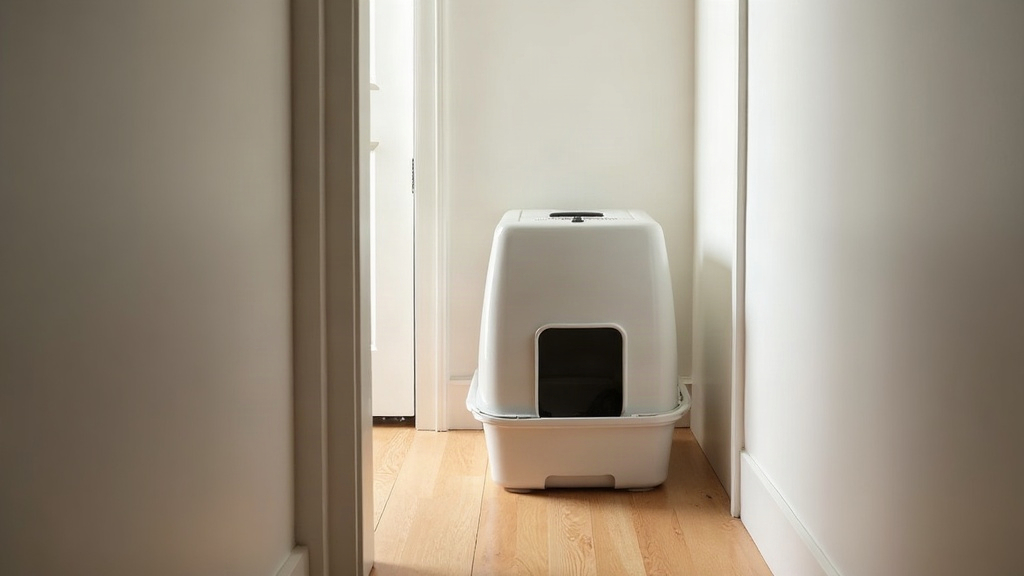
Making a Narrow Hallway Work for Your Litter Box
If you live in an apartment or an older house with hallways that barely fit two people walking side by side, you already know the problem. Where on earth does the litter box go? The good news is that with the right furniture, a bit of attention to airflow, and a couple of smart habits, you can tuck a litter box and its supplies into even the tightest hallway without turning the space into a smell zone or an obstacle course.
Why Hallways Actually Work (When Done Right)
People tend to dismiss hallways as dead space, but they’re genuinely one of the better spots for a litter box. Here’s why:
- They see almost no foot traffic from humans, yet cats can reach them any time, day or night.
- Hallways usually connect several rooms, so your cat has multiple ways in and out. That matters a lot if you have more than one cat, or a cat who gets nervous about feeling cornered.
- Keeping the box here means it stays out of the bedroom and off the living room floor, which is exactly where odor and tracked litter are most noticeable to guests.
The real obstacle is width. Most hallways run somewhere between 36 and 42 inches, and you still need to be able to walk through without turning sideways. The fix isn’t cramming a bulky box into that gap. It’s picking furniture built for narrow footprints in the first place.
Step 1: Measure Before You Buy Anything
Grab a tape measure before you shop around:
- Hallway width at its narrowest point. Door frames, light switches, and baseboard trim all steal inches you didn’t account for.
- Depth available, especially if you’re eyeing an alcove, a closet nook, or the triangle of space under a staircase.
- Door swing. Check that nearby doors still open all the way once the furniture is in.
A decent rule of thumb: keep at least 24 inches of clear walking space after the litter furniture is in place. If your hallway comes in under 36 inches wide, skip the middle stretch entirely and look at a corner nook or the dead end instead.
Step 2: Choose Hallway-Friendly Litter Furniture
Most off-the-shelf litter enclosures are way too deep for a hallway. Instead, look for:
- End-table style litter cabinets. A lot of these are only 16 to 18 inches deep, which lets them sit flush against the wall at the end of the hall.
- Slim vertical litter cabinets. Think narrow bookcase proportions: the box lives on the bottom shelf, supplies go up top.
- Under-stair conversions. If the hallway dead-ends at a staircase, that wedge-shaped space underneath can fit a box plus a small shelf, closed off with a curtain or a louvered door.
- A curtain-covered nook. A tension rod and a piece of fabric across a shallow alcove is the cheapest option going, no furniture required.
Steer clear of anything deeper than 20 inches unless your hallway is unusually generous. Anything bulkier becomes a daily pinch point everyone has to squeeze past.
Step 3: Prioritize Airflow Over Full Concealment
Here’s something people get wrong a lot: sealing the box inside a fully enclosed cabinet in a tight hallway often makes the smell worse, not better, because there’s nowhere for the air to go. So:
- Look for furniture with side vents, a mesh door panel, or a raised bottom that lets air move through.
- Don’t go with solid doors on every side. Leave at least one surface open to ventilation.
- If you’re using a curtain nook, drape it loosely. Don’t seal it shut like a tent.
Step 4: Store Supplies Vertically, Not on the Floor
A narrow hallway has zero floor space to spare for litter bags, scoops, and liners sitting around. Go up instead of out:
- A slim shelf mounted above the cabinet, or a small wall rack, holds the scoop and spare bags.
- A hanging organizer on the back of a nearby door keeps waste bags, gloves, and a mini broom within arm’s reach.
- Keep bulk litter somewhere else entirely, in a flat, sealed container under a bed, and only bring a week’s worth over to a small bin near the box.
Step 5: Control Odor Without Adding Clutter
- Use a litter mat sized to the hallway, something slim and rectangular rather than a big square one that eats up walking space.
- Put a small battery-powered air purifier or an odor-absorbing gel up on the shelf, not on the floor where it’s one more thing to trip over.
- Scoop every day. In a tight, enclosed hallway, odor builds up noticeably faster than it would in an open room.
Quick Checklist
- Measured width and left 24”+ walking clearance
- Chose furniture under 20” deep with ventilation
- Added vertical storage for scoop, bags, and liners
- Installed a slim litter mat
- Set a daily scooping reminder
Final Thoughts
A narrow hallway doesn’t mean you’re stuck with a litter box that’s on display or stinking up the place. Measure carefully, pick furniture that’s shallow and breathable, and move everything else up onto shelves or the back of a door. Do that, and you end up with a setup that stays discreet, works for your cat, and doesn’t make you wince every time a guest walks by.