Tension Rods vs. Over-the-Door Racks for Spray Bottle Storage
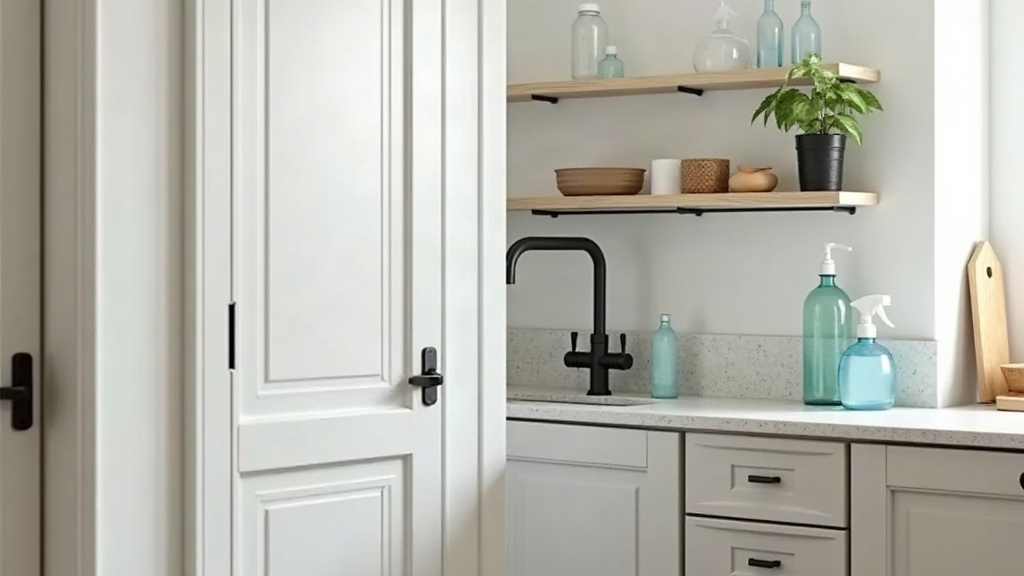
Tension Rods vs. Over-the-Door Racks: Which Wins for Spray Bottle Storage?
If you’ve ever opened a small under-sink cabinet to find spray bottles tipped over, leaking, or buried under a tangle of hoses, you already know the problem. Vertical cabinets waste all that empty space sitting above your supplies. Two budget fixes dominate the market: tension rods and over-the-door racks. Tension rods create a hanging rail by wedging bottle triggers between two rods. Over-the-door racks mount right on the cabinet door, holding bottles upright in slots or baskets. Both run under $15, but they tackle the problem from completely different angles, and the right pick depends on your cabinet’s shape, your plumbing layout, and how many bottles you’ve actually got crammed in there.
How Tension Rods Work
Tension rods are spring-loaded curtain rods (usually 3/8” to 5/8” diameter) installed in pairs, roughly 2-3 inches apart, near the top of the cabinet. You slide spray bottle trigger handles over the rods so the bottles hang suspended, freeing up the entire floor of the cabinet below. Think of it like a mini closet rod, just sized down for Windex instead of shirts.
Pros:
- Costs $5-$10 for a two-pack
- No drilling, no tools, just twist to extend
- Frees up 100% of the cabinet floor for bins, bulk supplies, or trash bags
- Works in almost any width cabinet since rods are adjustable (typically 12”-20”)
Cons:
- Only works for bottles with trigger sprayers (pump bottles or jugs won’t hang)
- Heavier bottles can sag the rod over time, especially cheap tension rods
- Requires enough vertical clearance (at least 10-12 inches) above the rod placement
- Can clash with pipes, P-traps, or garbage disposal units that cut into usable space
How Over-the-Door Racks Work
These racks clip or screw onto the inside of the cabinet door, usually with 2-4 wire or plastic slots that hold bottles upright by the neck or base. Some versions use adjustable tension brackets, so no screws needed at all.
Pros:
- Keeps bottles upright, eliminating leak risk from sideways storage
- Works with any bottle shape: pump sprayers, jugs, aerosol cans
- Doesn’t interfere with pipes since it mounts on the door, not inside the cabinet
- Easy to see and grab bottles since they face outward the moment the door opens
Cons:
- Adds weight to the cabinet door hinges; cheap hinges can wear out faster
- Reduces usable door swing clearance in tight bathrooms
- Some models only fit doors with a face frame lip 1/2” to 3/4” thick
- Limited capacity, usually 3-6 bottles max depending on rack size
Which One Fits Your Cabinet?
Choose tension rods if:
- Your cabinet has clear space above the P-trap and plumbing
- You mostly use trigger-spray bottles (all-purpose cleaner, glass cleaner, degreaser)
- You want to maximize floor storage for bins or paper towel rolls
- Your door hinges are older or lower-weight-rated
Choose an over-the-door rack if:
- Your pipes eat up most of the vertical space inside the cabinet
- You store a mix of bottle types, including pump bottles or aerosol cans
- You want bottles visible and grab-ready without digging around
- Your cabinet door is solid wood or has sturdy hinges
Can You Use Both?
Yes, and plenty of small kitchens and bathrooms already do this without even planning it that way. A common setup: tension rods near the back of the cabinet (away from the door swing) for trigger bottles, paired with a slim 2-slot over-the-door rack for pump bottles or a scrub brush. This hybrid approach squeezes a lot more out of a cabinet that’s often only 18-24 inches wide to begin with.
Durability Tips
- For tension rods, pick rubber-gripped ends rated for at least 5 lbs so nothing slips mid-week.
- For door racks, check the door’s hinge weight rating. Most standard cabinet hinges handle 15-20 lbs total, so resist the urge to load up 6+ full bottles on one rack.
- Wipe both systems down monthly. Spray residue buildup is the number one cause of sagging rods and sticky rack slots, and it sneaks up faster than you’d think.
Conclusion
Tension rods win when you need to maximize floor space and your plumbing cooperates. Over-the-door racks win when you’ve got a mix of bottle shapes and want everything visible at a glance. If your cabinet is small and already crowded, don’t treat this as an either/or decision. Combining both systems is often the smartest, most space-efficient way to keep spray bottles organized, upright, and leak-free under any small sink.