How to Store Heavy Cast Iron Skillets in a 12-Inch Base Cabinet
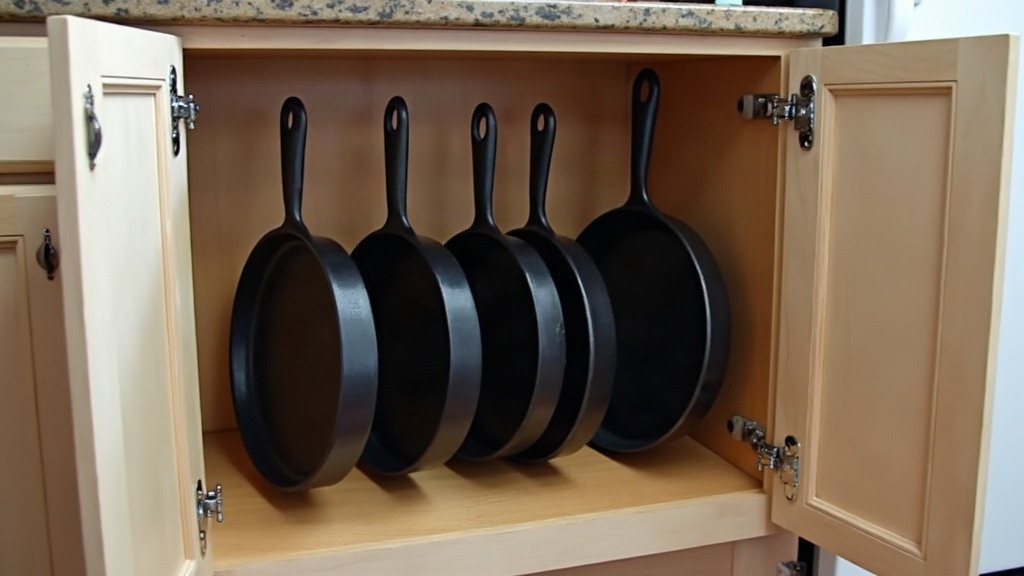
If you’ve got a stack of cast iron skillets and only a 12-inch base cabinet to put them in, you’re far from alone. Cramming heavy cookware into a narrow slot is one of the most common complaints I hear about kitchen storage. The good part: with a few smart accessories and a bit of planning, you can fit three or four skillets into that same 12 inches without scraping off the seasoning, wrecking your lower back, or burying the pan you actually reach for every day.
Why 12-Inch Cabinets Are Tricky for Cast Iron
A 12-inch cabinet opening is genuinely tight. Pile two or three skillets right on top of each other and here’s what you’re dealing with:
- Scratched seasoning from metal grinding against metal
- Wasted vertical space, because handles jut up or out and eat into clearance you didn’t plan for
- A fight to lift the bottom pan without first unloading everything stacked above it
- A real tipping risk if the pans aren’t braced against the cabinet walls
Cast iron is heavy, too. A single 12-inch skillet runs 7 to 8 pounds, so nest three or four together and you’ve got a stack pushing past 25 pounds. That’s not something you want just piled loosely. It needs to be distributed and anchored.
Best Storage Methods for a Narrow Cabinet
1. Vertical Slot Dividers
The single best fix for a 12-inch cabinet is a vertical pan organizer, those adjustable metal or bamboo dividers that stand upright. Rather than stacking skillets flat, you slot them in on their sides, almost like shelving books.
- Measure your cabinet depth first (usually 22-24 inches) and pick an organizer that won’t block the door from closing.
- Give cast iron 1.5 to 2 inches between dividers since these pans run thicker than your average nonstick set.
- Put the heaviest skillet, usually the biggest one, toward the back or in a reinforced center slot.
This setup kills scratching completely and means you can pull any single pan out without touching the rest.
2. Felt or Silicone Pan Protectors
Can’t fit a vertical organizer and have to stack instead? Use felt pan protectors or silicone pads between each skillet. They’re cheap (a few dollars for a multipack) and they:
- Stop seasoning from getting scraped off every time you stack or unstack
- Cut down the clanking noise when pans shift around
- Add almost no bulk, so 3-4 pans still fit comfortably in 12 inches
Stack largest at the bottom, smallest on top, for stability. And keep the pile under two-thirds of the cabinet’s height so the door still shuts without a fight.
3. Pull-Out Base Cabinet Drawer
Willing to retrofit a bit? A soft-close pull-out drawer rated for heavy loads (80+ lbs) solves the back-strain issue for good. Instead of crouching and groping around in a dark cabinet, you just lift the skillet straight up and out. Plenty of 12-inch drawer slide kits are sold as DIY projects for under $40, so this isn’t a huge investment.
4. Lid Rack on the Door
Want to claw back floor space inside the cabinet? Mount an adjustable lid rack on the inside of the door and store your cast iron lids there instead of nesting them with the pans. That alone can open up 3-4 extra inches of stacking room.
Placement Tips for Safety and Efficiency
- Heaviest pan goes on the bottom or lowest slot, period. Never let it balance on something lighter.
- Your most-used skillet belongs in the most accessible spot (front slot or top of the pile), regardless of its size.
- Keep all the handles pointing the same way so you can grab and slide a pan out without snagging its neighbor.
- Don’t mix cast iron with enameled cookware in the same stack. Enamel chips fast against bare iron edges, and that damage doesn’t buff out.
A Simple Weekly Habit
Once a week, wipe the inside of the cabinet and check whether the dividers have shifted under all that weight. Cast iron sheds a thin film of seasoning oil over time, and a quick wipe-down keeps that residue from building up and making pans slide around unpredictably when you pull one out.
Conclusion
A 12-inch base cabinet really doesn’t have to cap your cast iron collection. Vertical dividers are the single most effective fix, felt protectors are the cheapest, and a pull-out drawer is the best long-term option for your back. Pick based on your budget and how often that cast iron actually sees the stove. Whatever you choose, though, keep the heavy pan low, put a buffer between every surface, and make sure your go-to skillet is never the one buried at the bottom.