Organize a Deep Blind Corner Kitchen Cabinet Without a Lazy Susan
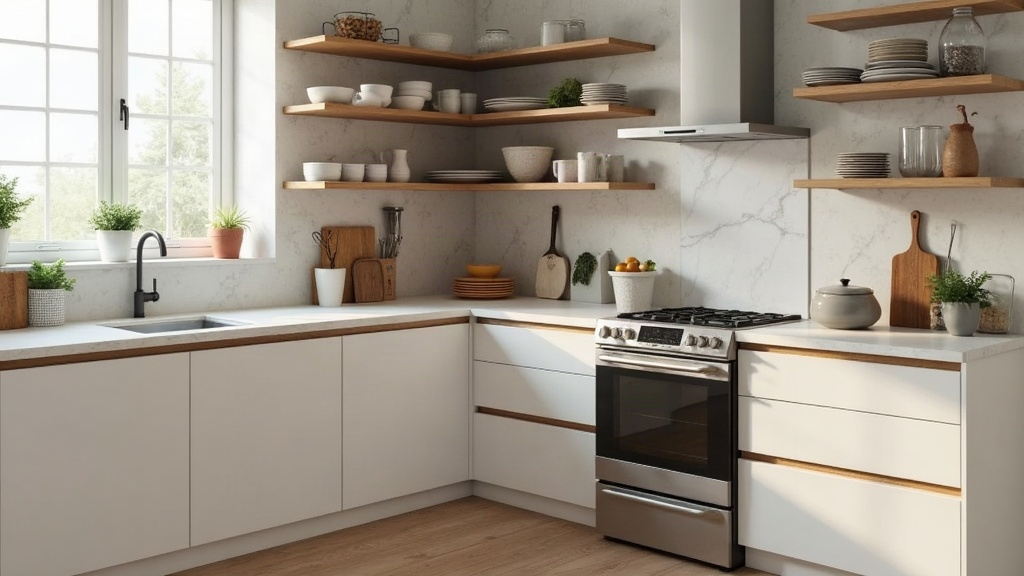
Blind corner cabinets are basically the black hole of the kitchen. Deep, oddly shaped, and stubborn about giving anything back once it’s shoved inside. Everyone reaches for a lazy Susan first, but honestly, it’s not always the right call. Some cabinets are too deep for a full spin. Some shapes just won’t let the tray rotate all the way around. And plenty of lazy Susan inserts cost more than you’d think, or need someone with actual carpentry skills to install. The good news: you can whip a deep blind corner cabinet into shape using pull-out systems, sliding shelves, and some deliberate zoning—similar to how you’d tackle storing bulky winter coats in a tight space without a closet—no rotating tray needed.
Why Blind Corner Cabinets Are So Tricky
Picture the shape: an “L” where one leg of the cabinet tucks behind the neighboring one, creating a pocket you can’t really see into. Whatever gets pushed toward the back tends to vanish for months, sometimes years (that jar of vanilla extract from 2021, anyone?). Without something that rotates, you need a setup that brings the storage out to meet you, instead of forcing you to army-crawl halfway into the cabinet to find a saucepan lid.
1. Install a Pull-Out Blind Corner Unit
The strongest lazy-Susan alternative out there is a swing-out or slide-out shelving unit, built specifically for this shape of cabinet.
- Swing-out units bolt onto the door itself and pivot outward, hauling a second shelf out of that hidden depth along with it.
- Slide-and-swing systems (Rev-A-Shelf makes some solid non-rotating models) glide forward on rails, so you get full visibility without anything spinning.
- Expect to pay somewhere between $80 and $200, and most people can get one installed in under an hour with a screwdriver and a drill.
This is about as close as you’ll get to lazy Susan convenience, minus the wobble. The shelves are sturdier and won’t tip, which matters if you’re storing heavy Dutch ovens or a stand mixer.
2. Use Deep Pull-Out Drawers Instead of Shelves
Not ready to spend on a full corner unit? Retrofit the cabinet with deep wire or wood pull-out drawers mounted on standard drawer slides.
- Measure the usable depth and width first, and don’t eyeball it. Blind corners are notoriously irregular, so a custom-cut wood drawer usually fits better than a generic kit off the shelf.
- Stack two drawers: one up front for everyday items, one further back for bulk storage you don’t need daily.
- Line the drawers so glass jars and bottles don’t skate around every time you pull them out.
3. Create Zones with Labeled Bins
If hardware isn’t in the cards right now, just divide the space into zones with stackable bins, no tools required:
- Front zone: oils, spices, snack bags, the stuff you touch almost every day.
- Middle zone: bulkier things, small appliances, mixing bowls.
- Back zone: the stuff you barely look at, holiday china, extra bakeware. Visibility matters less back here anyway.
Use clear bins with labels so you’re not digging blind. Leave a small gap between rows so each bin slides out like a mini drawer instead of getting wedged against its neighbor.
4. Add a Pull-Out Shelf Riser
A wire pull-out shelf riser, the same kind you’d see in a pantry, works better than expected in a blind corner. Mount it on basic drawer slides right at the front of the cabinet for anything you reach for often, while taller or bulkier items just sit put behind it.
5. Rethink What You Store There
Sometimes the fix isn’t hardware at all. It’s just being smarter about what goes where.
- Reserve the deepest, most annoying-to-reach section for large items you rarely touch: stockpots, roasting pans, that punch bowl you use once a year at Christmas.
- Keep the front, easy-to-grab area for weekly essentials.
- Vertical dividers, even a tension rod rigged up on the cheap, can hold baking sheets and cutting boards upright, using the depth of the cabinet without making you reach into it.
Maintenance Tips
- Do a clean-out every 3 to 6 months. Blind corners collect forgotten items fast, faster than you’d expect.
- Stick with non-slip liners so bins don’t shift every time you pull one open.
- Label the side of the bin facing out, not the top. Otherwise labels disappear the moment you stack anything on top.
Conclusion
Skip the lazy Susan guilt. Swing-out units, custom drawers, zoned bins, and a little strategic thinking can turn that dead corner into space you actually use. Start by measuring your cabinet honestly, depth, shape, all of it, then pick whichever system, store-bought or DIY, matches your budget and how you actually cook.