How to Store Wet Umbrellas and Rain Boots in a Micro-Entryway
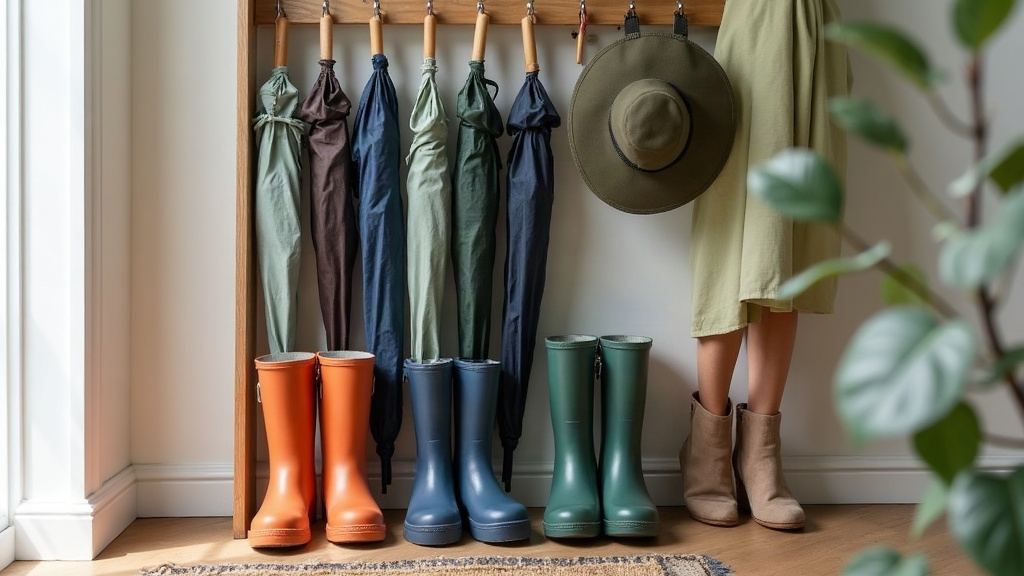
If your entryway is only a few square feet wide, one rainy afternoon can turn it into an obstacle course of puddles and soggy socks. The trick to storing wet umbrellas and rain boots in a micro-entryway isn’t finding more space. It’s using the vertical inches you already have, adding water-catching trays, picking quick-dry materials, and drawing a strict “no dripping past this line” zone. None of that requires a mudroom you don’t own.
Why Micro-Entryways Struggle with Wet Gear
Small entryways just weren’t built with rain gear in mind. A few problems show up again and again:
- No floor space for a boot tray or umbrella stand
- Water pooling on hardwood or carpet right by the door
- Musty smells from boots and umbrellas that never fully dry out
- Clutter creep, where wet items pile up simply because there’s no dedicated spot for them
The fix isn’t more square footage. It’s making smarter use of the narrow, vertical space you’re already standing in.
1. Use a Slim Boot Tray, Not a Boot Rack
Bulky boot racks eat up floor space fast, and in a tight entryway that’s space you can’t spare. Instead:
- Choose a low-profile rubber or silicone tray (18 to 24 inches wide) that slides flush against the wall or tucks under a bench.
- Look for trays with raised edges and a slight lip. They catch drips without turning into a tripping hazard in the dark.
- If floor space is truly at zero, try a fold-flat tray that hangs on a hook when it’s not holding boots.
Rain boots should stand upright in the tray, not flopped on their sides, so water drains out through the opening instead of pooling inside the boot itself.
2. Mount a Vertical Umbrella Holder
Floor-standing umbrella stands are probably the single biggest space-waster in a tiny entryway. Swap yours for:
- A wall-mounted umbrella hook or sleeve near the door. Even one sturdy hook can hold two umbrellas if you angle them right.
- A narrow over-the-door caddy with a built-in drip cup, hung on the back of a coat closet or the entry door itself.
- A magnetic umbrella holder on a metal door frame. It takes up zero footprint, which is exactly what you want.
Hang umbrellas open-side down, always. That way water runs off the canopy instead of collecting in a little pool at the tip.
3. Create a “Wet Zone” with a Washable Mat
Pick one small area, even 12x18 inches, and make it the official landing spot for anything wet:
- Use a microfiber or diatomite mat that soaks up moisture quickly and dries between uses.
- Place it directly under the umbrella hook and beside the boot tray, so every wet item stays inside one contained footprint instead of spreading across the floor.
- Wash it weekly. Skip this and you’ll be dealing with mildew smell by week three.
4. Add a Fold-Down Wall Shelf or Bench
Got even 6 inches of wall depth to spare? A fold-down shelf or bench gives you somewhere to sit while wrestling off wet boots, and it folds flat when you need the surface for mail or keys instead. Look for a slatted or perforated seat so moisture doesn’t sit trapped underneath, turning into a mildew farm.
5. Store Off-Season Gear Elsewhere
A micro-entryway works best when it holds only what you’re actually using this season. Rotate things out:
- Summer sandals and heavy winter boots go into a closet bin until they’re needed again
- Extra umbrellas move to a hallway closet, leaving just one “grab-and-go” umbrella by the door
Do this and you can free up 30 to 40% of your entryway floor space during the rainy months. That’s not a small win.
6. Add Ventilation to Prevent Odor
Trapped moisture in a tight space breeds mildew fast, sometimes within days. Fight back with:
- A small silica gel packet or moisture absorber tucked near the boot tray
- Cracking a nearby window, or running a hallway fan for 10 minutes after wet gear comes through the door
- Wiping boot trays and mats down weekly with a diluted vinegar solution
Quick Micro-Entryway Wet Gear Checklist
- ✅ Slim boot tray against the wall
- ✅ Wall-mounted or magnetic umbrella hook
- ✅ Washable absorbent mat underneath
- ✅ Fold-down shelf or bench (if wall space allows)
- ✅ Off-season gear stored elsewhere
- ✅ Moisture absorber to prevent odor
Final Thoughts
You don’t need a big mudroom to manage wet umbrellas and rain boots. What you need is the right mix: vertical storage, water-catching trays, and a designated wet zone that everyone in the house actually uses. Mount gear on walls and doors instead of letting it sprawl across the floor, rotate out whatever isn’t in season, and even the tiniest entryway can stay dry, tidy, and odor-free through the whole rainy stretch.