Organize Daily Medications and Vitamins on a Tiny Pedestal Sink
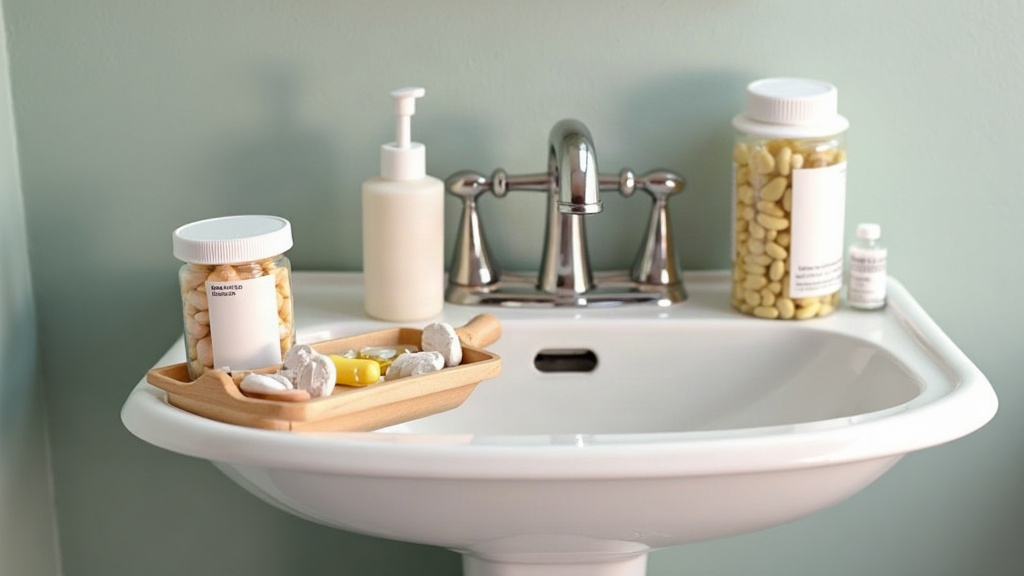
Why Pedestal Sinks Are So Hard to Organize
A pedestal sink was built for looks, not for function. Nice curve, open floor, zero storage. Typically you’re dealing with:
- No countertop surface for a pill organizer or a cup
- No cabinet underneath to hide bottles
- Barely any wall space directly around the basin
- A pedestal column that blocks the under-sink baskets most people rely on in a standard vanity
So you have to think around the sink instead of at it. Walls, the back of the door, nearby fixtures. The sink itself is basically off the table.
Step 1: Separate “Daily Grab” Items from “Stock” Items
Before you buy a single organizer, split your medications and vitamins into two piles:
- Daily-use items: the pills you actually take every morning or night (vitamins, prescriptions, supplements)
- Backup stock: full bottles, extras, refills, anything you’re not touching today
Only the daily stuff needs to live near the sink. Everything else, the backup bottles, the three-month supply of fish oil, can go in a bedroom closet, a linen cabinet, or even a kitchen shelf. That alone frees up a surprising amount of space in a room that has almost none to spare.
Step 2: Use Wall Space Above or Beside the Sink
No counter? Fine. The wall becomes your counter.
- Slim floating shelf: a 4 to 6 inch deep shelf above the sink fits a daily pill organizer, a small cup, maybe one or two bottles, without crowding the mirror.
- Adhesive wall baskets: Command-strip wire baskets (no drilling, no landlord headaches) mounted beside the mirror hold vitamin bottles upright and visible.
- Magnetic strips and tins: if your meds come in metal tins, or you repackage vitamins into small magnetic tins, a magnetic strip turns the wall into grab-and-go storage. Takes five minutes to set up.
Step 3: Install a Weekly Pill Organizer System
A 7-day pill organizer solves two problems in one move: less bottle clutter, and zero guesswork about whether you already took today’s dose.
- Mount a small hook or adhesive clip under the floating shelf, so the organizer has a home when it’s not in use
- Refill it once a week from your backup stock stored elsewhere (Sunday night works well for most people)
- Pick a slim, stackable design with AM/PM compartments instead of one of those bulky weekly boxes that eats half a shelf
Step 4: Use the Back of the Bathroom Door
Got a door? Then you’ve got real storage capacity, no drilling required.
- A clear pocket organizer, the kind originally made for shoes, works great for vitamin bottles. Each pocket holds one bottle upright and in plain view.
- Label every pocket. At 7am with no coffee yet, you don’t want to squint and guess which bottle is magnesium and which is melatonin.
- Hang it on the inside of the door for privacy, so guests using the bathroom don’t get a full inventory of your supplement habit
Step 5: Add a Tension Rod or Ladder Shelf Beside the Pedestal
Even a sliver of space, 8 to 10 inches, is enough:
- A slim ladder shelf (bamboo or metal) holds small baskets at different heights, stacking vertically instead of eating floor space
- A tension rod wedged vertically into a corner, fitted with a few small S-hooks, lets you hang mesh bags of vitamins like you would hang towels
Step 6: Keep a Portable Caddy for Daily Transport
Renting, or just not allowed to drill a single hole? A small caddy or tray sitting on the toilet tank or a nearby stool does the job better than people expect.
- Pick a caddy with a handle, so you can carry it to the sink for dosing, then put it right back
- Use divided trays to keep morning and evening medications from mixing together
Safety Tips for Bathroom Medication Storage
- Skip storing medications directly above the sink if steam and humidity build up heavily there. Moisture breaks down certain pills and supplements faster than you’d think.
- Keep anything near children on higher shelves, or in containers with real locks, not just lids
- Check expiration dates every time you refill the weekly organizer. A minute of checking now saves a stomachache later.
Conclusion
A tiny pedestal sink doesn’t have to mean pill bottles scattered across the back of the toilet. Separate what you use daily from what’s just backup stock, claim the wall space you do have, add a weekly pill organizer or an over-the-door caddy, and you end up with a system that’s tidy, fast to use, and doesn’t need a single inch of counter.